
How to Choose a China Bowling Manufacturer: Quality Standards, Supplier Verification & Real Cost Breakdown (2026 Guide)
Discover how to safely source premium, USBC-certified bowling equipment from China. This comprehensive 2026 guide reveals real FOB costs, a step-by-step supplier verification checklist, and a head-to-head equipment comparison between top Chinese manufacturers and legacy Western brands. Stop guessing and start building your high-ROI venue today.
- Why Buyers Consider China for Bowling Equipment
- How Different Types of Manufacturers Compare
- Quality Standards: What Certifications to Ask For
- Supplier Verification: How to Vet a Chinese Bowling Manufacturer
- Logistics, Shipping, and Customs Clearance
- Indicative Cost Ranges and Total Cost of Ownership
- Comparing Suppliers: An Evaluation Checklist
- Delivery and After-Sales: What to Expect
- Product Line Overview: Matching Format to Venue
- Is Buying from China Right for You?
- Working with Flying Bowling
- Start Your Bowling Equipment Sourcing Project
- FAQ
If you're planning to source bowling alley equipment from China, two questions probably matter most: can a Chinese manufacturer genuinely meet the quality and certification standards your project requires, and how do you avoid an unreliable supplier before any money changes hands? This guide covers what to verify before ordering — quality certifications, a step-by-step supplier verification process, shipping and customs basics, indicative cost ranges, and what to expect from delivery through after-sales support.
Why Buyers Consider China for Bowling Equipment
Chinese manufacturing capacity for commercial bowling equipment has grown substantially over the past decade, and a number of Chinese factories now produce string pinsetters, synthetic lane systems, ball returns, and scoring software at a level that competes directly with established Western brands on specification, while typically offering a lower equipment price and shorter lead time. The shift is driven by manufacturing scale, investment in string pinsetter technology specifically, and a growing number of suppliers offering turnkey project support — layout design, equipment, and installation coordination — rather than equipment alone.
This does not mean every Chinese supplier offers the same capability. The range between a capable, well-documented manufacturer and an unreliable trading company is wide, which is why supplier verification — covered in detail below — matters more than brand origin alone.
How Different Types of Manufacturers Compare
"China bowling manufacturer" covers several genuinely different types of business, and the type you're dealing with affects pricing, accountability, customization, and after-sales support. Understanding which category a supplier falls into — before evaluating their specific quote — clarifies what to expect.
Designs and produces equipment in-house. Has direct access to engineering, production records, and spare parts. Best positioned to support installation, certification documentation, and after-sales over the equipment's service life. Verify factory registration scope to confirm a supplier is actually in this category.
Sources equipment from one or more factories and resells it, often at a lower margin than the original manufacturer would quote directly, but with limited technical depth. After-sales capability depends on the trading company's relationship with the factory, not on direct accountability — response quality can vary significantly when a technical issue arises.
Manufactures to another company's design or specification, sold under the buyer's own brand. Common in the budget and mid-range segment. The buyer may not always know whether the equipment is OEM-sourced — worth asking directly if brand consistency or long-term parts compatibility matters to you.
Assembles a complete bowling system from components sourced across multiple factories — lanes from one, pinsetters from another, scoring from a third — without manufacturing any of them directly. Can offer broad customization, but warranty and support responsibility can become unclear when an issue crosses component boundaries.
Long-established US or European manufacturers with strong local service networks in their home markets and a long track record in competition-grade equipment. Typically carries a higher equipment price and longer lead time than Chinese manufacturers, with local support infrastructure that varies by destination market.
None of these categories is inherently better — a capable direct factory in China and an established Western brand can both be the right choice depending on your budget, timeline, certification requirements, and how much local support you need. What matters is identifying which category a specific supplier falls into and verifying their claims accordingly, using the checklist below.
Quality Standards: What Certifications to Ask For
Quality claims need to be backed by documentation, not adjectives. If a supplier cannot produce the certificates referenced below for the specific model and configuration you are buying, treat that as a gap to resolve before ordering — not as a detail to overlook.
Pro tip: ask any supplier — Flying Bowling included — for a physical cross-section sample of their synthetic lane panel before placing a bulk order. It is the fastest way to verify material thickness and construction claims directly. → View Flying Bowling's certification documents
Supplier Verification: How to Vet a Chinese Bowling Manufacturer
A professional website and responsive sales team are not evidence of manufacturing capability. Use the steps below before transferring any deposit.
Warning Signs of an Unreliable Supplier
Logistics, Shipping, and Customs Clearance
Logistics is one of the most underestimated parts of importing bowling equipment. Understanding how the equipment ships helps avoid unexpected port costs and delays.
Indicative Cost Ranges and Total Cost of Ownership
Equipment pricing varies significantly by configuration, lane count, and specification — the ranges below are indicative planning references, not quotations. Request a configuration-specific quote for accurate budgeting.
| Configuration | 4 Lanes (FOB, indicative) | 8 Lanes (FOB, indicative) |
|---|---|---|
| Compact format (duckpin/mini) | $40,000–$90,000 | $70,000–$160,000 |
| Standard format | $60,000–$120,000 | $110,000–$220,000 |
FOB factory pricing based on selected Flying Bowling project configurations, for reference only. Pricing varies by exact specification, lane count, and current material costs — request an itemized quotation for your specific project. Compare quotes from multiple suppliers on equivalent specification, not on headline price alone.
Hidden Costs to Budget For
A lower upfront equipment cost can lower the capital required to open, but actual payback period depends on local lane utilization, pricing, and operating costs specific to your venue and market — there is no universal payback timeline that applies across projects. Model your own ROI using your venue's expected utilization and local market pricing rather than relying on a generic industry figure.
Comparing Suppliers: An Evaluation Checklist
Rather than ranking specific brands against each other, use the criteria below to evaluate any supplier — Chinese or Western — you are considering. The right answer depends on your budget, timeline, certification requirements, and the level of customization your project needs.
| Criterion | What to Confirm |
|---|---|
| Certification | USBC status by specific model; ISO 9001 status; CE marking for EU/UK shipments — documents provided, not claimed |
| Lead time | Confirmed production and shipping timeline in writing, with realistic contingency for customs and installation |
| Customization | Whether layout design, lane finish, scoring software, and furniture can be tailored, or only standard packages are offered |
| Track record | Verifiable completed installations, ideally in a comparable market or venue type, with contactable references |
| After-sales support | Documented response time commitment, spare parts stocking and shipping options, and on-site training scope |
Delivery and After-Sales: What to Expect
Typical Timeline
| Production and factory testing | 6–9 weeks (configuration-dependent) |
| Ocean freight (destination-dependent) | 4–6 weeks |
| Port unloading and customs clearance | 1–2 weeks |
| On-site installation and calibration | 1–2 weeks |
Total timeline from deposit to opening is typically 3–4 months under normal conditions, but varies by destination, customs complexity, and site readiness — confirm a specific schedule with your supplier rather than relying on a generic estimate.

After-Sales Support to Confirm Before Ordering
Product Line Overview: Matching Format to Venue
Is Buying from China Right for You?
Sourcing from China makes sense for some buying situations and not others. Use this as a quick gut-check before you start the supplier verification process in detail.
- ✓Distributors building a regional product line
- ✓Hotels and resorts adding bowling as an amenity
- ✓FECs and mixed-use entertainment venues
- ✓New center builds with a defined lead time and budget
- ✓Cost-sensitive projects where equipment price is a major budget factor
- ✗A small, isolated repair on existing equipment
- ✗Sourcing a single replacement part you need urgently
- ✗Needing a local technician on-site tomorrow
- ✗No tolerance for the production and shipping lead time international orders require
For the situations on the right, a local distributor, your existing equipment manufacturer's regional service network, or a domestic repair technician will almost always be faster and more practical than an international order — even from a fully verified, capable factory.

Working with Flying Bowling
Flying Bowling is a direct manufacturer of commercial bowling equipment across five formats, supplying projects internationally. We provide factory visits — in person or via live video — third-party audit documentation on request, and reference clients who have agreed to be contacted. Certification status, including USBC eligibility, is confirmed by specific model and configuration, not at brand level.
Sourcing from China can meaningfully lower equipment cost and shorten lead time compared to some alternatives, but the outcome depends entirely on which supplier you choose and how thoroughly you verify them before committing capital. The checklist in this guide — certification by model, factory verification, contract clarity, and confirmed after-sales terms — applies regardless of which country or brand you ultimately choose.
Start Your Bowling Equipment Sourcing Project
Share your venue type, format preference, target lane count, and destination. Flying Bowling can provide product specifications, certification documentation, and an itemized quotation for your review.
FAQ
Q1: How much does bowling equipment from China typically cost?
Pricing varies by configuration and lane count. As indicative FOB references: a compact format (duckpin/mini) runs $40,000–$90,000 for 4 lanes; a standard format runs $60,000–$120,000 for 4 lanes. Request an itemized quotation for your specific project rather than relying on general ranges.
Q2: Is Chinese bowling equipment USBC certified?
Certification applies to specific pinsetter models and installation configurations — not to a brand as a whole. Ask which exact models are certified, request the certificate, and verify it directly against the USBC equipment specifications list rather than accepting a general claim.
Q3: What's the difference between a factory, a trading company, and an OEM supplier in China?
A direct factory designs and manufactures in-house, giving the most direct access to engineering and after-sales support. A trading company resells from one or more factories, often at a lower price but with after-sales quality depending on their relationship with the factory. An OEM/ODM supplier manufactures to another company's design, sold under a different brand. Check business registration scope to confirm which category a supplier actually falls into.
Q4: How do I verify a Chinese bowling manufacturer is legitimate?
Check their business license against China's National Enterprise Credit Information Publicity System and confirm their registered scope shows them as a manufacturer. Request a live video factory tour, look for third-party platform verification (Alibaba/Made-in-China "Verified Supplier" badges backed by SGS or TÜV audits), and ask for reference clients in your region that you can contact directly.
Q5: What's the typical lead time from order to installation?
Production and factory testing typically take 6–9 weeks, ocean freight 4–6 weeks depending on destination, customs clearance 1–2 weeks, and on-site installation 1–2 weeks. Total timeline from deposit to opening is usually 3–4 months, though this varies by destination and site readiness.
Q6: What warning signs indicate an unreliable supplier?
No verifiable factory address or refusal to show the building on video; no real installation photos (only 3D renderings); pricing significantly below comparable quotes without explanation; no warranty terms in writing; and an inability to name any international clients you can contact.
Q7: How is bowling equipment shipped, and what should I know about customs?
A standard 40ft High Cube container typically holds 2–4 complete lane setups. A single lane setup can weigh over 1,500 kg, so confirm forklift access at your site. Equipment is generally classified under HS code 9504.90, though this should be confirmed with a licensed customs broker. Make sure your supplier provides a complete Commercial Invoice, Packing List, Certificate of Origin, and Bill of Lading well before the shipment arrives.
Q8: What after-sales support should I confirm before ordering?
A written response-time commitment for remote technical support, confirmation of which wear parts (strings, microswitches, pins) are kept in stock with express shipping options, and on-site staff training on basic troubleshooting and maintenance before the installation team departs.
Q9: Is buying bowling equipment from China the right choice for my situation?
It's generally a good fit for distributors, hotels, FECs, and new center builds with a defined timeline and budget, especially where cost is a major factor. It's usually not the right channel for a small isolated repair, a single urgently needed replacement part, or any situation requiring a local technician on-site immediately — a local distributor or your existing supplier's regional network will typically be faster for those needs.
Q10: Does equipment cost determine how fast I'll see a return on investment?
A lower equipment cost can reduce the capital required to open, but actual payback period depends on local lane utilization, pricing, and operating costs specific to your venue and market. There's no universal payback timeline — model ROI using your own venue's expected performance rather than a generic industry figure.
Recommended products
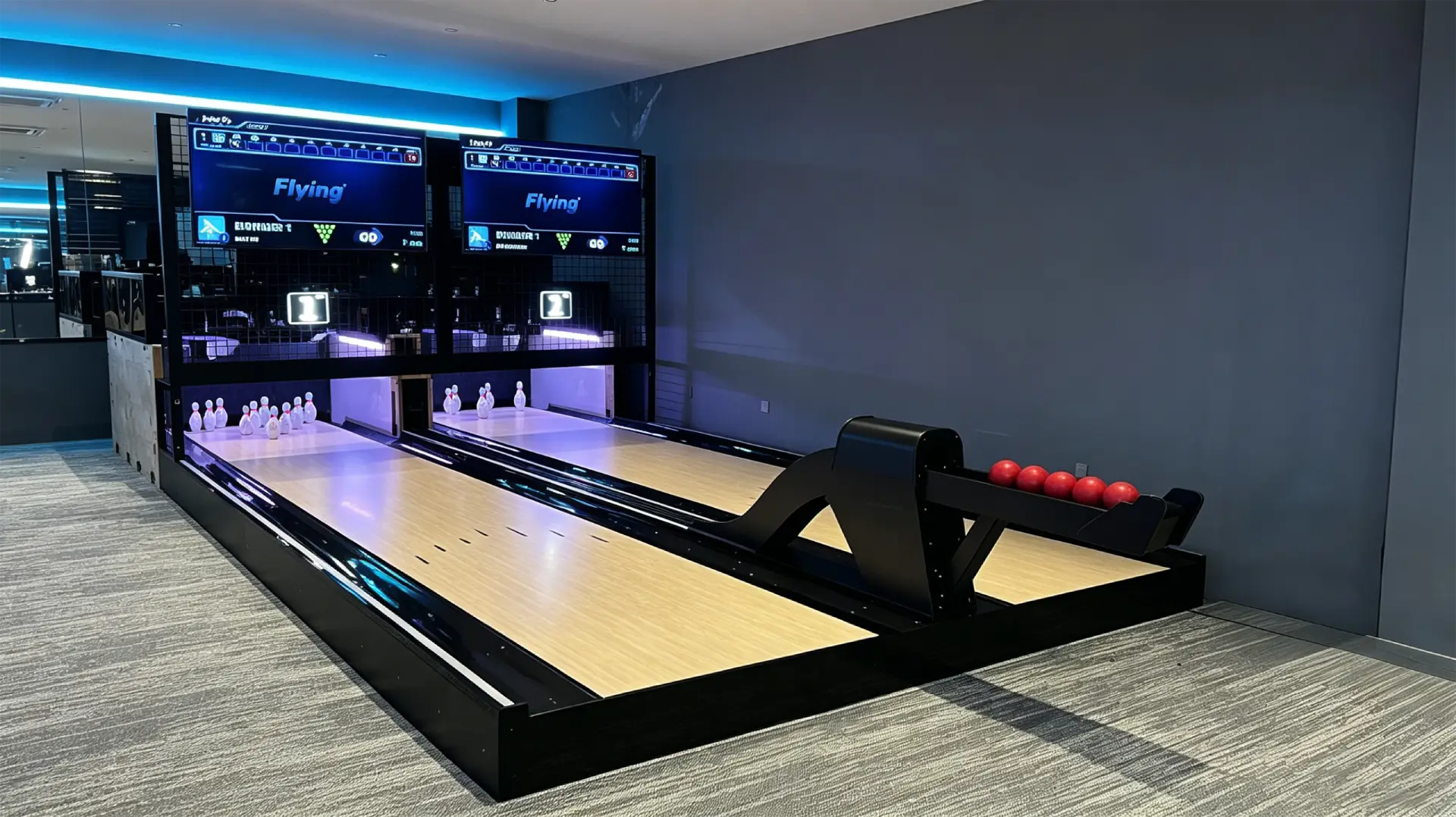
Flying Smart Duckpin Bowling Equipment for Commercial Venues
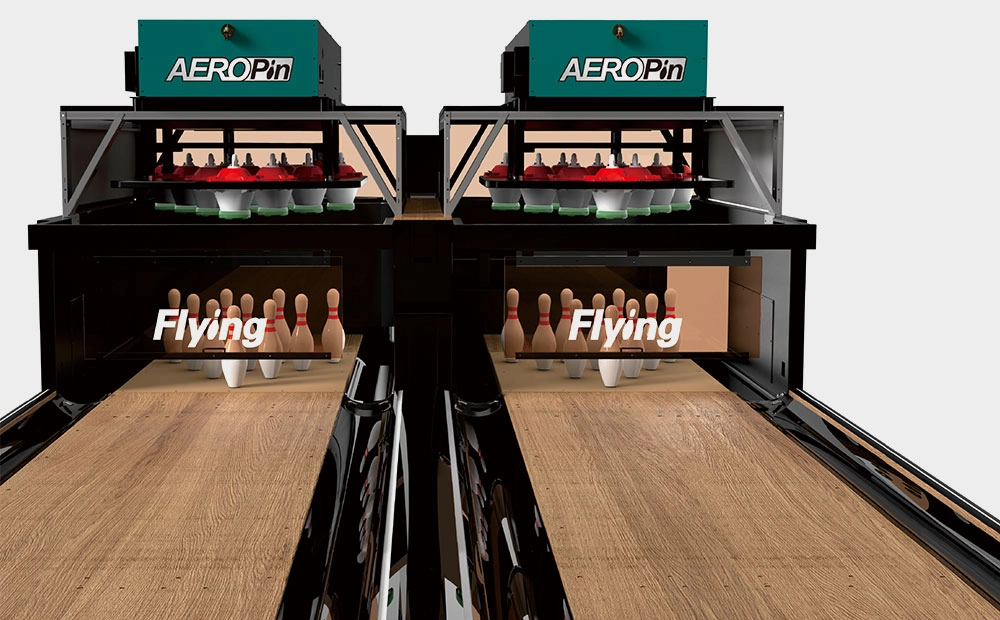
AEROPIN™ USBC-Certified String Pinsetter System
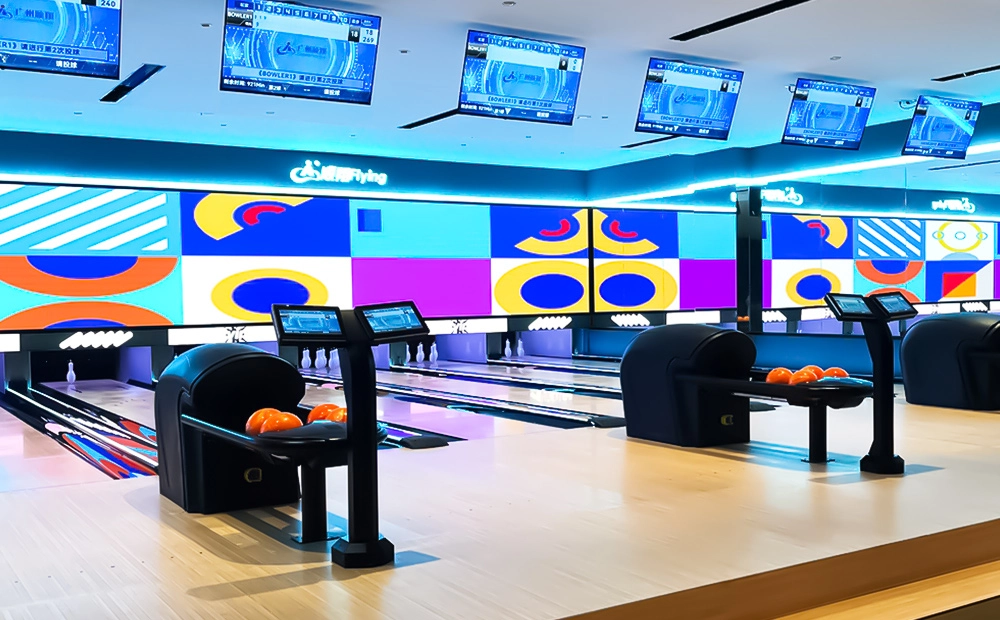
Medium Bowling Equipment for Compact Social Venues
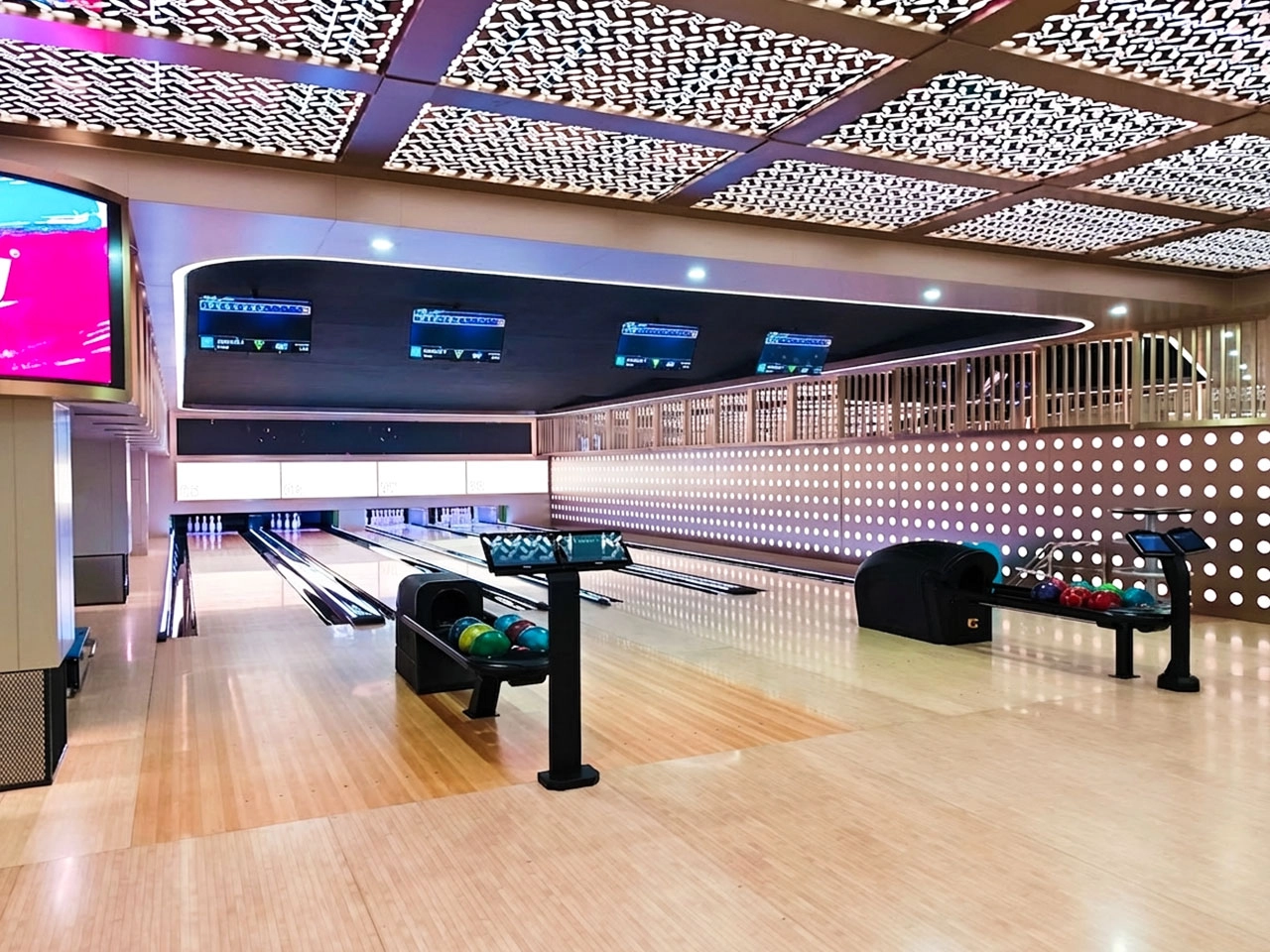
Complete Bowling Alley Equipment Package for Commercial Bowling Centers
You may also like
Build a commercial bowling venue with Flying’s complete string pinsetter bowling alley equipment package. The system includes the AEROPIN™ USBC-certified string pinsetter, customizable lanes, automatic scoring, ball return, lane lighting, pins, control hardware, and overseas installation support.
Designed for commercial bowling centers, family entertainment venues, hotels, resorts, bars, and premium private projects, this turnkey bowling system helps operators reduce sourcing complexity and prepare for reliable long-term operation.
Flying Smart Duckpin Bowling is a compact duckpin bowling equipment system designed for bars, family entertainment centers, hotels, resorts, cinemas, boutique bowling alleys, and social entertainment venues. With a standard 9.13m duckpin bowling lane, 1.25kg lightweight balls, automatic scoring, ball return, LED lighting, and a smart string pinsetter, it creates a fast-paced and easy-to-play bowling experience in a smaller footprint than traditional bowling.
The system is available as a turnkey duckpin bowling package, including lane equipment, a string pinsetter system, scoring hardware, control software, global shipping, installation guidance, and technical support.
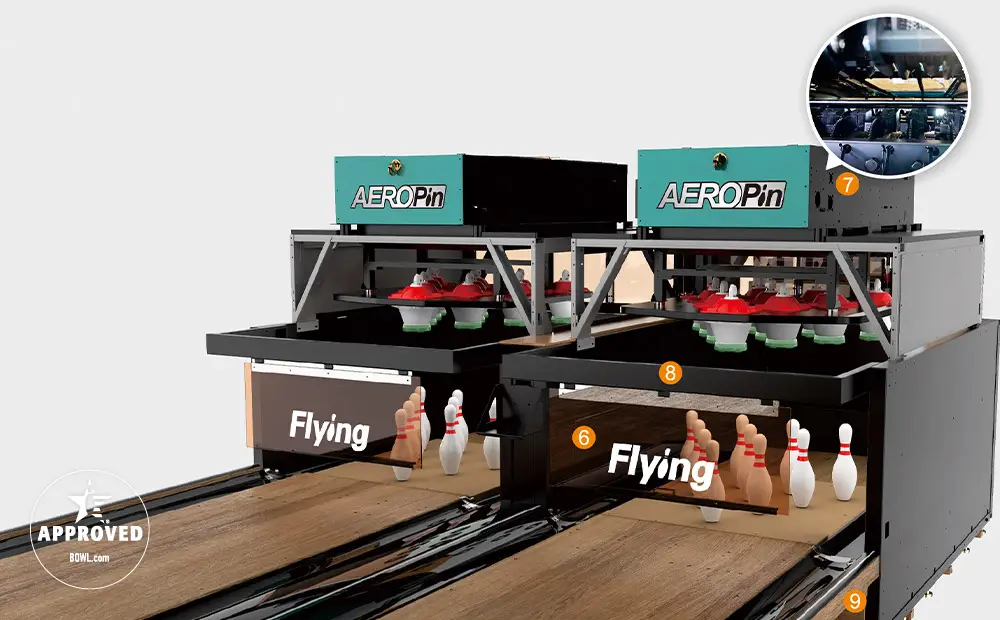
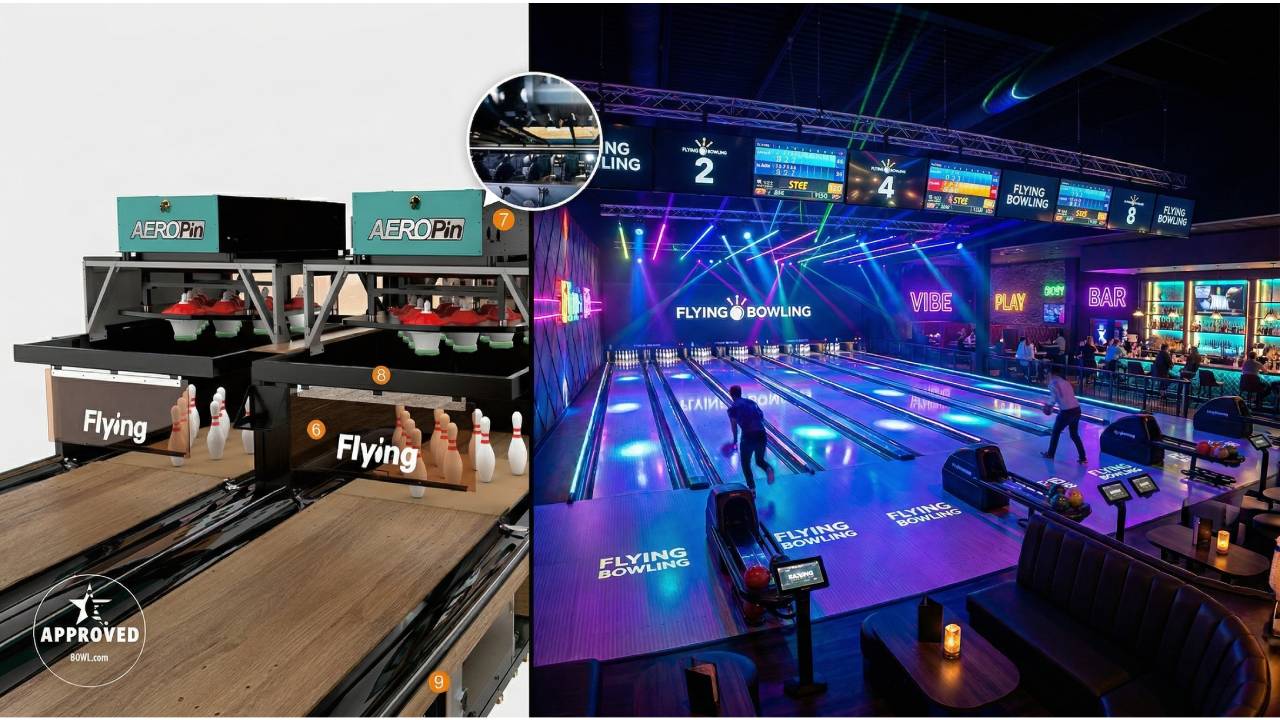
AEROPIN is Flying Bowling’s USBC-certified string pinsetter system for modern commercial bowling centers. Designed for fast pin setting, smooth ball return, low maintenance, and stable daily operation, it helps venue operators build league-ready and entertainment-focused bowling projects with confidence.
Flying Social Medium Bowling is a compact medium bowling equipment system designed for bars, cafes, family entertainment centers, community leisure venues, hotels, resorts, and small indoor entertainment spaces. With customizable lane lengths from 9.6m to 18m, small balls, lighter pins, string pinsetter technology, ball return, and automatic scoring, it creates an easy-to-play social bowling experience for players of different ages and skill levels.
Compared with full-size standard bowling, medium bowling requires less space and offers a more casual, interactive format. It is a practical choice for venues that want to add a bowling attraction without building a full commercial bowling alley.
Contact Flying
Start your bowling alley project
If you contact us now for more details, we can provide you with a custom bowling alley service. Our service team will get back to you within 24 hours normally!
© 2026 Flying BOWLING. Designed by gooeyun.
FOLLOW US:

Flying Bowling
Flying Bowling
Flyingbowling
Flyingbowling
Flyingbowling