
Custom Bowling Ball Cost 2026: Drilling, Inserts & Out-the-Door Prices
This guide explains how much a custom bowling ball costs in 2026, including ball price, drilling, fitting, inserts, thumb slugs, interchangeable thumb systems, used ball plug and redrill costs, personalized graphics and long-term maintenance.
Quick Answer: How Much Does a Custom Bowling Ball Cost in 2026?
A custom bowling ball usually costs about $100–$150 out the door for a basic fitted plastic ball, $150–$220 for an entry-level reactive custom setup, $210–$300 for a mid-performance reactive setup, and $270–$420+ for a high-performance reactive ball with fingertip drilling, inserts, a thumb slug, or an interchangeable thumb system.
Key Takeaways
- A custom bowling ball is not just the ball itself. It usually includes fitting, drilling, layout, and grip options.
- A basic fitted plastic ball may cost around $100–$150 out the door.
- An entry-level reactive custom ball often costs around $150–$220.
- A mid-performance reactive custom setup often costs around $210–$300.
- A high-performance reactive custom ball can reach $270–$420+ depending on drilling, inserts, and thumb options.
- Buying online may look cheaper, but separate drilling fees can reduce or eliminate the savings.
- Used bowling balls can be affordable, but plug-and-redrill costs, old layouts, and coverstock condition matter.
- A custom bowling ball is different from a personalized bowling ball with graphics or a logo.
The final price of a custom bowling ball depends on the ball category, drilling layout, pro shop labor, grip parts, maintenance needs, and whether you buy the ball online or directly from a pro shop.
For a general ball-only price guide, see Flying Bowling’s full guide on how much a bowling ball costs. This article focuses specifically on custom bowling ball cost: the fitted, drilled, and ready-to-use price.
Custom Bowling Ball Cost Chart 2026
Use this chart to estimate the real out-the-door cost of a custom bowling ball before comparing online prices, pro shop packages, or used ball deals.
| Custom setup | Ball price | Drilling & parts | Estimated out-the-door cost |
|---|---|---|---|
| Basic plastic fitted ball | $50–$90 | $40–$60 | $100–$150 |
| Entry-reactive custom ball | $100–$140 | $50–$80 | $150–$220 |
| Mid-performance reactive ball | $150–$190 | $60–$100 | $210–$300 |
| High-performance reactive ball | $200–$300+ | $70–$120+ | $270–$420+ |
| Used ball with plug and redrill | $40–$100 | $50–$120 | $90–$220 |
| Multi-ball thumb system setup | Ball-dependent | $100–$150+ | Varies by arsenal |
These are general market estimates. Actual pricing varies by region, pro shop, ball model, grip style, drilling complexity, and whether parts such as inserts or thumb systems are included.
What Does “Custom Bowling Ball” Actually Mean?
The phrase “custom bowling ball” can mean different things. Before comparing prices, it is important to define what you are paying for.
In performance bowling, a custom bowling ball usually means a ball that is fitted and drilled for your hand. A pro shop may measure your span, grip, thumb fit, finger size, and release style. For performance players, the shop may also consider your positive axis point, ball speed, rev rate, axis rotation, and desired layout.
A custom bowling ball may include:
- Ball selection
- Hand measurement
- Grip fitting
- Conventional or fingertip drilling
- Finger inserts
- Thumb slug
- Interchangeable thumb system
- Layout planning
- Surface adjustment
- Plug and redrill work for used balls
- Maintenance recommendations
Shelf Price vs. Out-the-Door Cost
The shelf price is the price of the undrilled bowling ball. The out-the-door cost is the total amount you pay to make the boat ready to use.
For custom bowling balls, the out-the-door cost is the more important number. A ball listed online for $140 may still require drilling, finger inserts, a thumb slug, layout service, shipping, or a pro shop surcharge for outside balls.
A pro shop may list a similar ball for $190 but include fitting and standard drilling. That means the higher shelf price may not actually be more expensive once you compare the full setup.
| Buying route | Looks cheaper? | Hidden cost | Best for |
|---|---|---|---|
| Online ball + local drilling | Often, yes. | Drilling-only fee, layout service, inserts, shipping | Experienced buyers |
| Pro shop package | Not always | Fewer hidden costs if drilling is included | Beginners and league bowlers |
| Used ball + plug/redrill | Sometimes | Plugging, resurfacing, layout limits, old coverstock | Budget testing |
| Full custom setup | No | Higher upfront cost | Serious bowlers who need fit consistency |
The best choice is not always the lowest sticker price. It is the setup that gives you the right fit, predictable release, and suitable ball motion for the lane conditions you usually bowl on.
Custom Ball Cost by Performance Level
Custom cost changes significantly based on the type of ball you choose. The more advanced the coverstock and core, the higher the starting price.
Basic Plastic Custom Ball: $100–$150 Out the Door
A plastic or polyester custom ball is usually the cheapest fitted option. It is often used for straight bowling, spare shooting, or casual play.
This setup may include:
- Plastic or polyester ball
- Conventional drilling or basic fingertip drilling
- Basic hand fit
- Optional simple inserts
A plastic custom ball is not designed for a strong hook. If your goal is straight accuracy, Flying Bowling’s guide to best bowling balls for straight bowlers can help explain why plastic balls are often used for spare shots.
Entry-Reactive Custom Ball: $150–$220 Out the Door
An entry-level reactive resin ball is often a good first custom ball for bowlers learning hook. It provides more friction and motion than plastic without being as aggressive as high-performance reactive equipment.
This setup may include:
- Entry-reactive resin ball
- Fingertip drilling
- Finger inserts
- Basic layout
- Optional thumb slug
For many bowlers, this is the best value range. It gives enough performance to learn modern release mechanics without paying for technology that may be difficult to control.
Mid-Performance Reactive Custom Ball: $210–$300 Out the Door
Mid-performance reactive bowling balls are often used by league bowlers who want a stronger and more versatile reaction. These balls may have better coverstock technology, more defined core shapes, and stronger motion than entry-level options.
This setup may include:
- Mid-performance reactive resin ball
- Fingertip drilling
- Inserts
- Thumb slug
- More intentional layout
- Surface recommendation
For bowlers building an arsenal, this category often becomes the benchmark ball: the first ball used to read the lane and decide what adjustment comes next.
High-Performance Reactive Custom Ball: $270–$420+ Out the Door
High-performance reactive balls usually cost the most because of stronger coverstock formulas, more advanced cores, and more specialized reaction shapes. These balls are often designed for heavy oil, strong hook, angular backend motion, or advanced tournament conditions.
This setup may include:
- High-performance reactive resin ball
- Advanced drilling layout
- PAP-based layout planning
- Finger inserts
- Thumb slug
- Interchangeable thumb option
- Surface adjustment
- Maintenance plan
A high-performance custom ball is not automatically the best choice for beginners. If the ball is too strong for your skill level or lane condition, it may hook too early, lose energy, or become difficult to control. For broader selection context, see Flying Bowling’s best bowling balls for 2026 guide.
What Custom Drilling Adds to the Total Cost
Drilling is one of the biggest differences between a regular ball purchase and a custom bowling ball setup. Custom drilling is not simply “putting three holes in the ball.” It can involve grip measurement, layout planning, inserts, thumb fit, and release goals.
| Custom drilling item | Typical cost | When it matters |
|---|---|---|
| Conventional drilling | $40–$50 | Basic fit or spare ball |
| Fingertip drilling | $60–$80 | Hook development and reactive balls |
| PAP measurement | $10–$20 | Better layout planning |
| Advanced layout | $80+ | Tournament or multi-ball players |
| Finger inserts | $10–$20 | Comfort and release |
| Thumb slug | $15–$30 | Consistent thumb feel |
| Interchangeable thumb system | $50–$100+ | Multi-ball arsenals |
Conventional drilling is usually simpler and cheaper. It is often used for beginners, children, or spare balls.
Fingertip drilling is more common for bowlers who want to hook the ball. It allows the fingers to come out of the ball more efficiently, which can help the bowler create better release and rotation.
More advanced custom layouts may consider how soon the ball starts rolling, how strongly it changes direction, and how it matches the bowler’s release. For a deeper explanation of ball motion factors, review Flying Bowling’s bowling ball comparison chart. Bowlers focused on hook can also compare setup needs in this guide to best bowling balls for hook and spin.
Inserts, Thumb Slugs, and Interchangeable Thumb Systems
Grip parts can add meaningful cost, but they may also improve comfort and consistency.
Finger Inserts
Finger inserts are soft grips placed in the finger holes. They can improve comfort, reduce skin irritation, and help the bowler create a cleaner release. Typical cost: about $10–$20.
Thumb Slug
A thumb slug is a separate material inserted into the thumb hole and then drilled to fit the bowler’s thumb. It can create a smoother and more consistent feel than drilling directly into the ball material. Typical cost: about $15–$30.
Interchangeable Thumb System
An interchangeable thumb system allows a bowler to move the same thumb insert between multiple balls. This can help serious bowlers maintain a consistent thumb feel across an arsenal. Typical cost: about $50–$100+ for setup, depending on parts and labor. This option is usually not necessary for casual bowlers. It is more useful for bowlers with multiple performance balls.
Online vs. Pro Shop: Which Is Cheaper After Drilling?
Buying a bowling ball online can look cheaper at first. However, the online price is usually for the undrilled ball only.
If you buy online, you may still pay for:
- Shipping
- Drilling-only service
- Layout consultation
- Finger inserts
- Thumb slug
- Plugging if the ball is used
- Possible surcharge for outside balls
A pro shop package may appear more expensive upfront, but it may include standard drilling and fitting. For beginners, this can be a better value because the pro shop can recommend a suitable ball and fit it correctly.
| Scenario | Better option |
|---|---|
| You are a beginner and need fitting advice | Pro shop package |
| You already know your specs and layout | Online may work |
| You need a high-performance tournament layout | Pro shop consultation |
| You are buying used equipment | Pro shop inspection first |
| You want the lowest possible upfront price | Online or used, but compare final cost |
| You want fewer surprises | Pro shop package |
The best buying route depends on experience level. New bowlers should usually prioritize fit and guidance over the lowest online price.
Used, Plugged, and Redrilled Balls: Cost and Risk
A used bowling ball can reduce upfront cost, but it may not always be cheaper after custom work.
A used ball may cost $40–$100. Plugging and redrilling may add $50–$120. If the ball needs resurfacing or new inserts, the total cost can increase further.
Used custom ball costs may include the following:
- Used ball purchase
- Plugging old holes
- Redrilling new layout
- New finger inserts
- New thumb slug
- Resurfacing
- Oil extraction
- Inspection for cracks or damage
Used balls can be worth considering if the coverstock is still healthy, the ball is not cracked, the old layout can be safely plugged, and the new layout will still work. Used balls are riskier for beginners because it can be hard to evaluate ball condition, layout options, and coverstock life without help. A pro shop inspection is strongly recommended before buying used.
Custom Bowling Ball vs. Personalized Bowling Ball
Many people use “custom bowling ball” and “personalized bowling ball” as if they mean the same thing. They are different.
A custom bowling ball usually focuses on fit and performance:
- Hand measurement
- Grip style
- Drilling layout
- PAP measurement
- Inserts
- Thumb options
- Surface adjustment
A personalized bowling ball usually focuses on appearance:
- Name
- Logo
- Image
- Graphic design
- Team theme
- Gift or promotional use
A personalized graphic ball is often made with a plastic or polyester shell. It may look unique, but it does not automatically create more hooks or better performance. If you want a ball that fits your hand and improves performance, focus on custom drilling and ball selection. If you want a gift, brand display, or visual design, a personalized graphic ball may be the right choice.
Long-Term Ownership Costs
The first purchase is not the only cost. A custom bowling ball may need regular care to keep its reaction consistent.
Possible long-term costs include:
- Ball cleaner
- Microfiber towels
- Surface pads
- Finger insert replacement
- Thumb adjustment
- Resurfacing
- Oil extraction
- Plug and redrill if your fit changes
- Additional balls for different lane conditions
Reactive resin balls absorb lane oil over time. If the ball stops reacting the way it used to, it may need cleaning, resurfacing, or professional maintenance. The value of a custom setup depends on how often you bowl, whether the fit improves comfort and consistency, and how well the ball matches your lane conditions.
When Is a Custom Bowling Ball Worth It?
A custom bowling ball is usually worth considering when you bowl regularly, want a better fit, or need more predictable performance than house balls can provide.
A custom bowling ball may be worth it if:
- You bowl weekly or join a league
- House balls hurt your hand or do not fit well
- You want to learn hook
- You want more consistent release
- You need a ball matched to your lane condition
- You want a repeatable spare or strike setup
- You are building a multi-ball arsenal
A custom bowling ball may not be necessary if:
- You bowl only once or twice a year
- You do not care about fit or score consistency
- You are buying purely for decoration
- You are not ready to maintain the ball
- A house ball already meets your casual needs
For Bowling Centers: Custom Fit vs. House Ball Budget
Bowling centers, family entertainment centers, and training venues should separate individual custom ball planning from house ball budgeting.
House balls are usually designed for public use. They need to be durable, easy to maintain, and available in different weights. Custom bowling balls, on the other hand, are fitted to one person’s hand and release.
A venue may need to consider the following:
- House balls in multiple weights
- Youth-friendly options
- Spare ball availability
- Ball racks and storage
- Replacement cycles
- Pro shop partnership or referral options
- Beginner coaching materials
- League player needs
- Lane maintenance and oil patterns
- Full equipment planning beyond balls
Ball cost is only one part of a bowling venue budget. Lane systems, string pinsetters, ball returns, scoring, seating, maintenance access, and spare parts also matter. For broader venue planning, review Flying Bowling’s bowling alley equipment guide.
Common Mistakes When Budgeting for a Custom Bowling Ball
- Only comparing ball price: The ball price is not the same as the custom setup price. Always include drilling, inserts, thumb options, and possible maintenance.
- Buying too much ball too early: A beginner may not need a high-performance reactive ball. A controlled entry reactive setup may be more useful.
- Ignoring fit: A properly fitted ball can improve comfort and release consistency. Poor fit can make even an expensive ball difficult to use.
- Assuming online is always cheaper: Online pricing can be lower, but drilling-only fees and add-ons can make the final cost similar to a pro shop package.
- Buying used without inspection: A used ball may need plug and redrill work, resurfacing, or inserts. It may also have coverstock or layout issues.
- Confusing personalized graphics with performance customization: A graphic ball may look custom, but performance depends on coverstock, core, fit, drilling, and layout.
- Skipping maintenance: Reactive resin balls need cleaning and surface care. Without maintenance, performance can decline over time.
Conclusion: Plan for the Real Custom Bowling Ball Cost
In 2026, a custom bowling ball can cost about $100–$420+ out the door, depending on ball type, drilling, inserts, thumb options, and setup complexity.
A basic fitted plastic ball may cost around $100–$150. An entry-level custom ball may cost around $150–$220. A mid-performance reactive setup may cost around $210–$300, while a high-performance reactive custom ball with advanced layout and grip options can reach $270–$420+.
The best value is not always the cheapest ball or the most expensive ball. It is the setup that matches your hand, skill level, release style, and lane condition. For individual bowlers, custom fit can improve comfort and consistency. For bowling centers, fitted balls and house balls should be considered as part of a broader equipment and customer experience plan.
Planning a Bowling Venue or Equipment Upgrade?
If you are building a bowling center, family entertainment center, or training venue, Flying Bowling can help review lane systems, string pinsetters, ball returns, and project requirements.
Frequently Asked Questions
How much does a custom bowling ball cost in 2026?
A custom bowling ball usually costs about $100–$420+ out the door, depending on ball type, drilling, inserts, thumb options and layout complexity. Basic plastic setups are cheaper, while high-performance reactive setups cost more.
options,What is included in a custom bowling ball price?
A custom bowling ball price may include the ball, hand measurement, drilling, layout, finger inserts, thumb slug, surface adjustment and sometimes fitting consultation. Always ask the pro shop what is included.
adjustment,Is drilling included in a custom bowling ball cost?
Sometimes. A pro shop package may include standard drilling, while online purchases usually require separate drilling fees. Inserts, thumb slugs and advanced layouts may cost extra.
slugs,How much does fingertip drilling cost?
Fingertip drilling often costs about $60–$80, depending on the shop and whether inserts or thumb options are included. It is commonly used for bowlers who want to hook the ball.
How much do finger inserts and thumb slugs cost?
Finger inserts often cost about $10–$20. A thumb slug may cost about $15–$30. Prices vary by shop, material and whether installation is included.
material,How much does an interchangeable thumb system cost?
An interchangeable thumb system can cost about $50–$100+ for parts and setup. It is usually most useful for bowlers with multiple bowling balls who want the same thumb feel in every ball.
Is it cheaper to buy a bowling ball online or from a pro shop?
Online prices may look cheaper, but drilling and fitting are usually separate. A pro shop package may look more expensive upfront but can include fitting and standard drilling, making the final cost competitive.
How much does it cost to plug and redrill a used bowling ball?
Plug and redrill work can cost about $50–$120 depending on the shop, number of holes, layout work and whether new inserts or thumb parts are needed.
work,What is the cheapest custom bowling ball option?
The cheapest custom option is usually a fitted plastic or polyester ball with basic drilling. It may cost around $100–$150 out the door, depending on shop pricing and grip options.
Is a custom reactive resin ball worth it for beginners?
A custom entry-level reactive resin ball can be worth it for beginners who want to learn hook. However, beginners usually do not need the most aggressive high-performance reactive ball as their first custom setup.
What is the difference between custom and personalized bowling balls?
A custom bowling ball usually refers to fit, drilling and layout. A personalized bowling ball usually refers to graphics, logos, names or images. Personalized graphics do not automatically improve performance.
drilling,names,How much should bowling centers budget for fitted balls vs. house balls?services,Custom-fittedcycle,custom-fitted
Bowling centers should budget house balls separately from custom fitted balls. House ball costs depend on quantity, weight range, durability, replacement cycle and shipping. Custom fitted balls are usually for individual players, pro shop services or training programs.
More Articles

Let’s Build a center Together
Partner With a Trusted Bowling Alley Design, One-Stop Solution Manufacturer.
Flying has successfully built ideal bowling alleys for more than 3,000 customers.
Technical Expert
You may also like our products
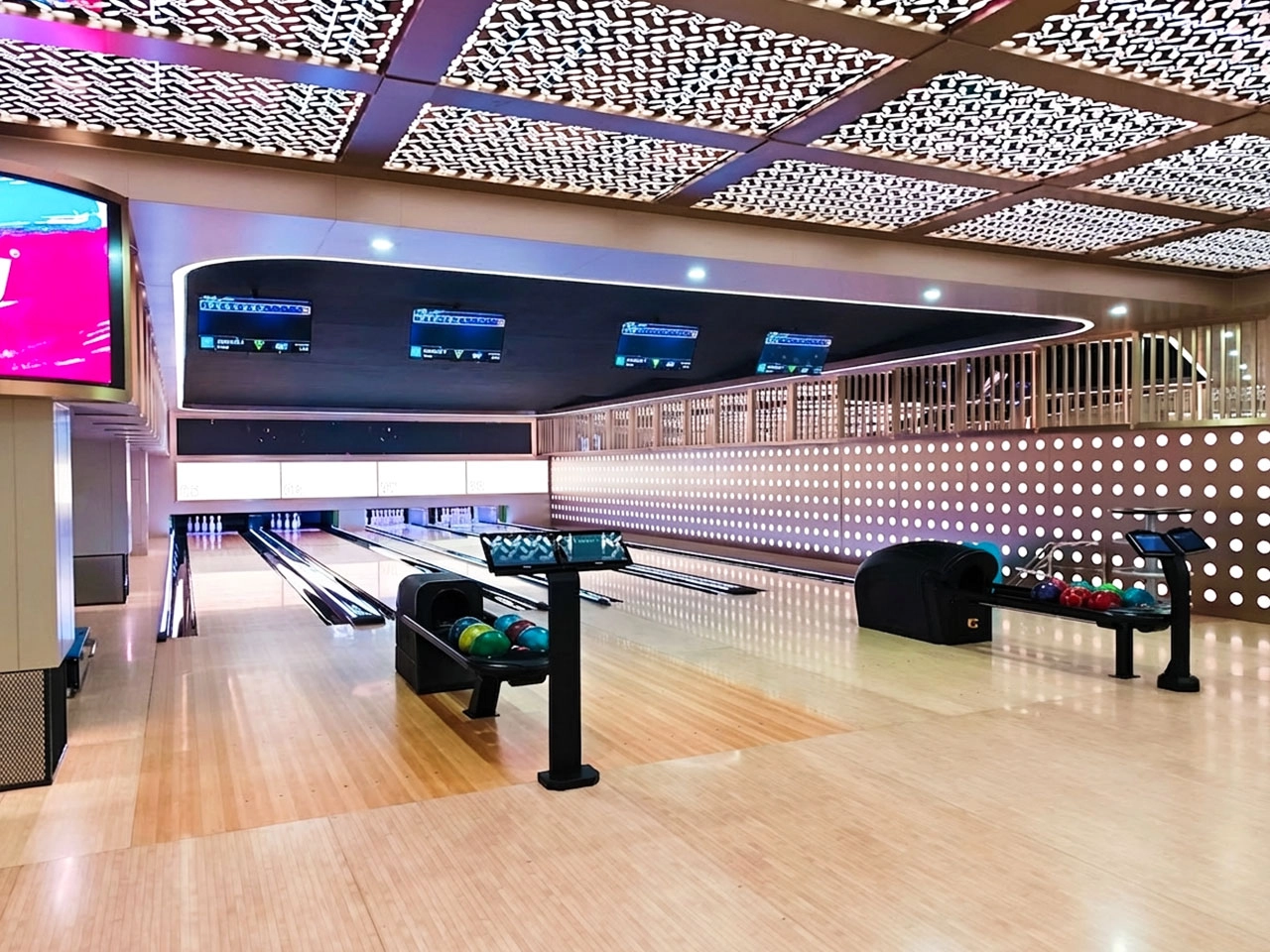
Build a commercial bowling venue with Flying’s complete string pinsetter bowling alley equipment package. The system includes the AEROPIN™ USBC-certified string pinsetter, customizable lanes, automatic scoring, ball return, lane lighting, pins, control hardware, and overseas installation support.
Designed for commercial bowling centers, family entertainment venues, hotels, resorts, bars, and premium private projects, this turnkey bowling system helps operators reduce sourcing complexity and prepare for reliable long-term operation.
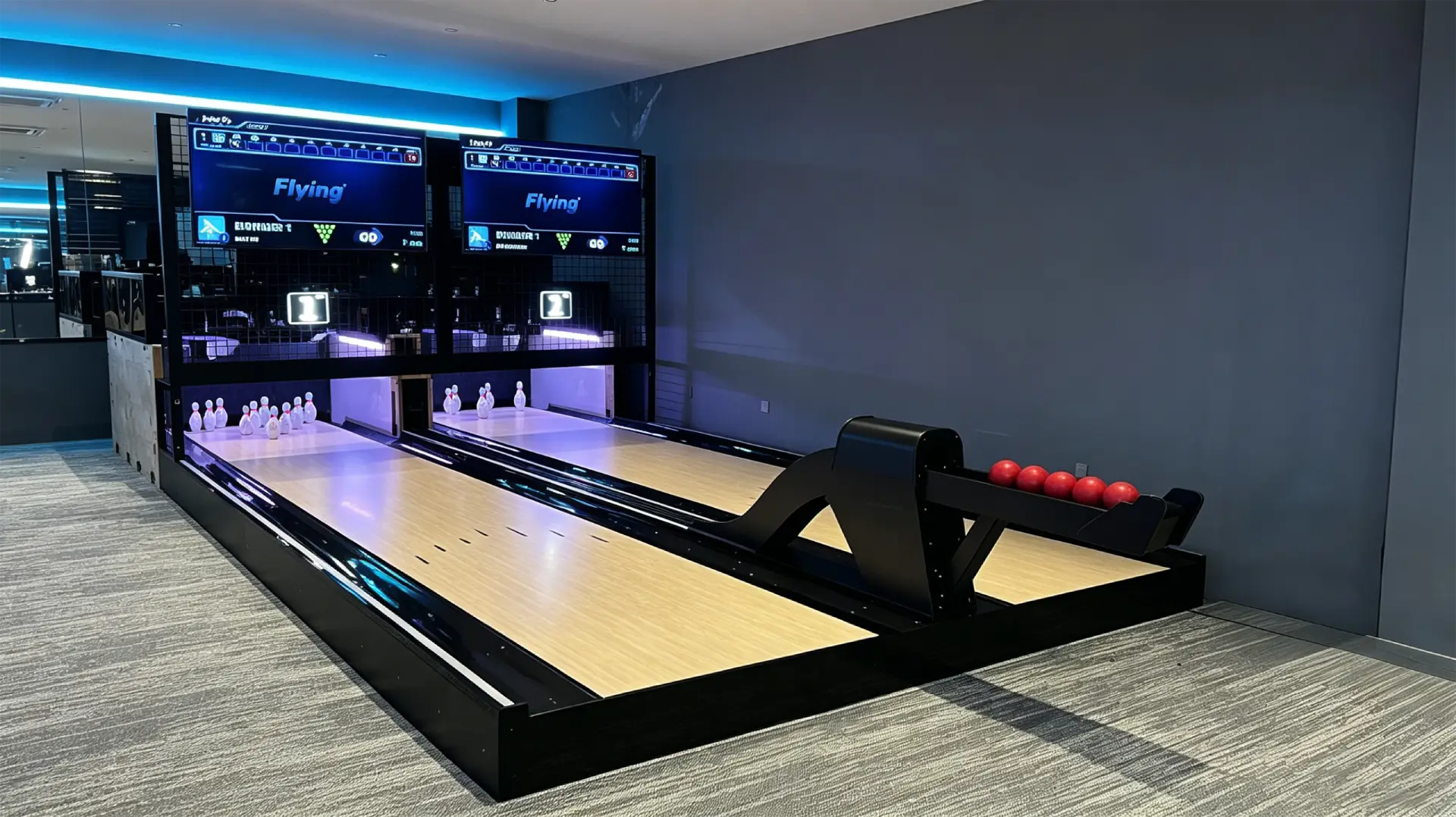
Flying Smart Duckpin Bowling is a compact duckpin bowling equipment system designed for bars, family entertainment centers, hotels, resorts, cinemas, boutique bowling alleys, and social entertainment venues. With a standard 9.13m duckpin bowling lane, 1.25kg lightweight balls, automatic scoring, ball return, LED lighting, and a smart string pinsetter, it creates a fast-paced and easy-to-play bowling experience in a smaller footprint than traditional bowling.
The system is available as a turnkey duckpin bowling package, including lane equipment, a string pinsetter system, scoring hardware, control software, global shipping, installation guidance, and technical support.
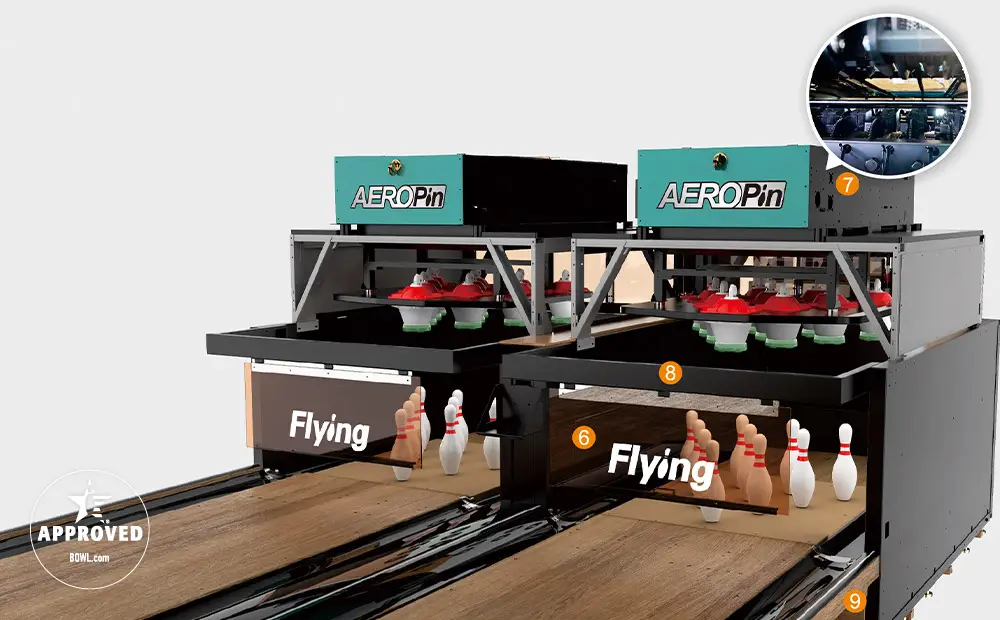
AEROPIN is Flying Bowling’s USBC-certified string pinsetter system for modern commercial bowling centers. Designed for fast pin setting, smooth ball return, low maintenance, and stable daily operation, it helps venue operators build league-ready and entertainment-focused bowling projects with confidence.
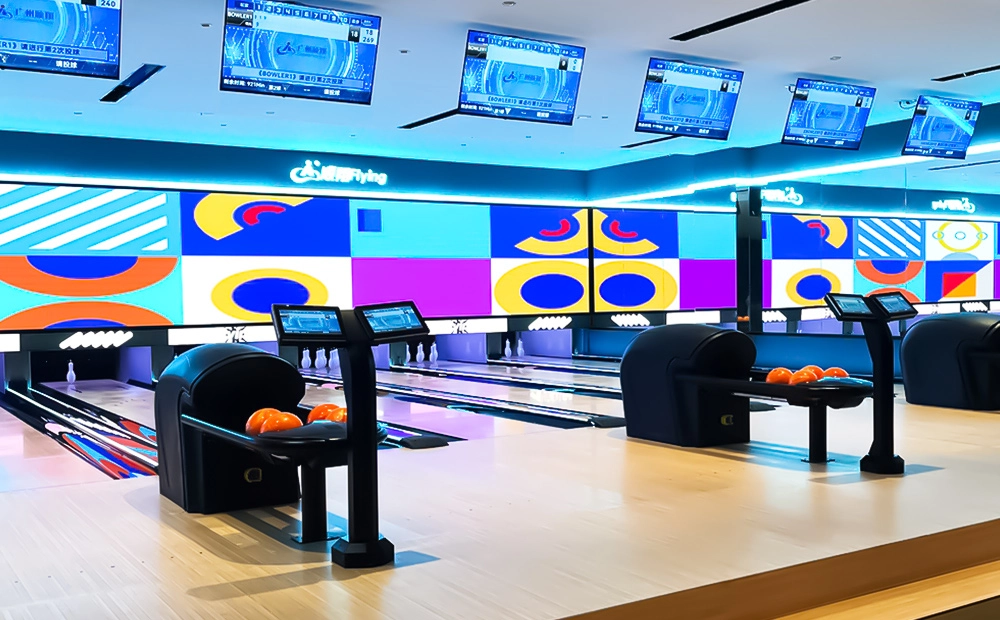
Flying Social Medium Bowling is a compact medium bowling equipment system designed for bars, cafes, family entertainment centers, community leisure venues, hotels, resorts, and small indoor entertainment spaces. With customizable lane lengths from 9.6m to 18m, small balls, lighter pins, string pinsetter technology, ball return, and automatic scoring, it creates an easy-to-play social bowling experience for players of different ages and skill levels.
Compared with full-size standard bowling, medium bowling requires less space and offers a more casual, interactive format. It is a practical choice for venues that want to add a bowling attraction without building a full commercial bowling alley.
Contact Flying
Start Your Custom Bowling Alley Project
If you contact us now for more details, we can provide you with a custom bowling alley service. Our service team will get back to you within 24 hours normally!
© 2026 Flying BOWLING. Designed by gooeyun.
FOLLOW US:

Flying Bowling
Flying Bowling
Flyingbowling
Flyingbowling
Flyingbowling