

Bowling Alley Cost in Canada: 2026 Complete Guide (CAD & USD)
How Much to Build a Bowling Alley in Canada is detailed with precise cost breakdowns in CAD and USD, covering construction, equipment, and operational expenses. Flying Bowling offers clear financial insights to help investors plan and budget effectively for 2026 projects.
- Why 2026 Is a Strong Entry Point for Canadian Bowling Venues
- Bowling Alley Cost in Canada: 2026 Summary
- Section 1: Commercial Space and Rent in Canada
- Section 2: Bowling Equipment Cost in Canada
- Section 3: Importing Bowling Equipment to Canada
- Section 4: Construction and Fit-Out Costs
- Section 5: Permits and Local Requirements
- Section 6: Cost by Lane Configuration
- Section 7: Home Bowling Alley Cost in Canada
- Section 8: New Build vs. Buy or Lease Existing
- Section 9: Monthly Operating Costs for a 4-Lane Canadian Venue
- Section 10: Revenue Planning
- Section 11: Choosing the Right Bowling Format for Canada
- Section 12: 10 Steps to Opening a Bowling Alley in Canada
- How Flying Bowling Supports Canada Projects
- FAQ
Canada’s indoor entertainment market continues to generate demand for bowling venues — from boutique eatertainment lounges in Toronto to private home bowling rooms in suburban Ontario. In 2026, two structural forces are reshaping project economics: lower operating costs from modern string pinsetter systems, and higher per-guest revenue potential from FEC and eatertainment venue models.
This guide gives Canadian investors, venue operators, and homeowners a realistic 2026 cost picture — covering equipment FOB pricing, freight and CBSA import requirements, commercial rents by city, construction, permits, and monthly operating cost benchmarks.
2-lane, 4-lane, 6-lane and 8-lane cost estimates in CAD and USD; commercial rent assumptions for Toronto, Vancouver, Calgary, Montreal and Ottawa; CBSA import, GST/HST and customs brokerage considerations; home bowling alley cost in Canada; build-new vs. buy-or-lease decisions; and monthly operating costs with eatertainment revenue planning.
Quick Answer
A 2-lane compact or duckpin bowling setup in Canada starts from approximately CAD 41,000–55,000 in FOB equipment, with a complete project estimate of CAD 70,000–120,000. A 4-lane commercial setup typically requires CAD 160,000–260,000, while a 6-lane standard center may require CAD 240,000–400,000+. Home bowling projects usually fit best with duckpin or mini bowling because these formats require less room length than full-size tenpin.
Why 2026 Is a Strong Entry Point for Canadian Bowling Venues
Lower Operating Costs with String Pinsetters
Traditional free-fall pinsetter systems carry higher mechanical complexity, specialist maintenance requirements, and heavier power demand. Modern string pinsetter systems are designed to simplify daily operation and reduce operating workload.
For planning purposes, a 4-lane venue in Ontario running long daily hours can model string pinsetter systems at an estimated up to 50–60% lower pinsetter-related electricity consumption compared with traditional free-fall mechanical systems, depending on equipment configuration, usage hours, and venue conditions. For a venue running 300+ days per year, that difference can compound meaningfully across the operating P&L.
Beyond electricity, string pinsetters can also support faster reset cycles, lower maintenance callout frequency, and reduced technician dependency — all important in Canadian markets where skilled trades, after-hours labor, and utility costs can materially affect margins.
For a detailed technical comparison, see: String Pinsetter vs. Free-Fall Pinsetter: Complete Comparison for Bowling Venue Operators.
Eatertainment and FEC Models Increase Revenue Per Visit
Industry associations such as BPAA and IAAPA have long emphasized the role of food and beverage, events, and attractions in modern bowling and FEC operations. For internal planning, many operators model eatertainment-style venues at 30–40% higher per-capita spend than lane-rental-only concepts, depending on F&B, event packages, arcade mix, customer demographics, and local pricing.
For Canadian investors, this model is especially relevant in Toronto, Vancouver, Calgary, Edmonton, Montreal, and Ottawa — urban markets where guests expect social entertainment experiences, not just sport. Bowling serves as the anchor attraction that drives group bookings; F&B, arcade games, and events convert that foot traffic into higher total spend.
For revenue modeling by business type, see: 12 Most Profitable Bowling Business Models for 2026.
Bowling Alley Cost in Canada: 2026 Summary
| Setup | FOB Equipment (USD) | Approx. CAD FOB | Complete Project Estimate (CAD) |
|---|---|---|---|
| 2-Lane Compact / Duckpin | $30,000–$40,000 | CAD 41,000–55,000 | CAD 70,000–120,000 |
| 4-Lane Commercial | $60,000–$85,000 | CAD 82,000–118,000 | CAD 160,000–260,000 |
| 6-Lane Standard Center | $90,000–$130,000 | CAD 123,000–180,000 | CAD 240,000–400,000+ |
| 8-Lane Anchor Venue | $140,000–$200,000 | CAD 190,000–275,000 | CAD 380,000–650,000+ |
Complete project cost includes FOB equipment, freight to Canada, customs brokerage, applicable taxes, installation, permits, and basic fit-out. Venue rent, staffing, marketing, and ongoing operating costs are separate.
Get a CAD-Denominated Equipment Quote
Tell us your project city, available floor space, preferred lane count, and bowling format. Flying Bowling can provide an itemized quotation and layout recommendation for your Canada project.
Contact Flying BowlingSection 1: Commercial Space and Rent in Canada
Location is frequently the single largest cost variable in a Canadian bowling project. A 4-lane venue in Toronto’s entertainment district can face annual occupancy costs several times higher than an equivalent unit in Calgary or Winnipeg.
Canadian commercial leases are typically quoted annually per square foot, either as net, triple-net, or gross lease structures. Before signing any lease, confirm total annual base rent, additional rent, CAM, property tax allocation, ceiling height, column-free span, loading dock access, electrical capacity, and zoning compliance for entertainment use.
| City / Area | Indicative Commercial Rent | Recommended Space for 4 Lanes | Estimated Annual Rent |
|---|---|---|---|
| Toronto / GTA | CAD 30–65 per sqft/year | 3,000–4,500 sqft | CAD 90,000–292,500/year |
| Vancouver / Metro | CAD 35–70 per sqft/year | 3,000–4,500 sqft | CAD 105,000–315,000/year |
| Calgary / Edmonton | CAD 18–40 per sqft/year | 3,000–4,500 sqft | CAD 54,000–180,000/year |
| Montreal | CAD 20–45 per sqft/year | 3,000–4,500 sqft | CAD 60,000–202,500/year |
| Ottawa / Winnipeg / Halifax | CAD 15–35 per sqft/year | 2,500–4,000 sqft | CAD 37,500–140,000/year |
Section 2: Bowling Equipment Cost in Canada
Flying Bowling supplies four formats suited to different Canadian project profiles, from residential game rooms to full commercial centers.
| Equipment Type | FOB Cost Per Lane (USD) | 4–6 Lane FOB Range | Approx. CAD Equivalent | Best Canada Use Case |
|---|---|---|---|---|
| Mini Bowling (FCMB) | $9,000–$12,000 | $36,000–$72,000 | CAD 49,000–100,000 | Home rooms, kids’ venues, compact FECs |
| Duckpin Bowling (FSDB) | $11,000–$16,000 | $44,000–$96,000 | CAD 60,000–134,000 | Bars, cafés, boutique venues, home game rooms |
| Medium Bowling (FSMB) | $14,000–$18,000 | $56,000–$108,000 | CAD 77,000–150,000 | Mid-size FECs, hotel recreation areas |
| Standard Bowling (FCSB) | $18,000–$25,000 | $72,000–$150,000 | CAD 100,000–210,000 | Commercial centers, large entertainment venues |
Flying Bowling’s AEROPIN™ string pinsetter — USBC-certified — is available for standard bowling configurations requiring competitive league compliance.
For a comprehensive breakdown of what each equipment tier includes and how to evaluate supplier proposals, see: Bowling Equipment Buyers Guide: 5 Criteria That Separate Good Investments from Costly Mistakes.
Section 3: Importing Bowling Equipment to Canada
All bowling equipment imported to Canada must clear the Canada Border Services Agency (CBSA). Import costs depend on HS code classification, country-of-origin documentation, customs valuation, port of entry, and province-specific GST/HST rules. First-time importers should engage a licensed Canadian customs broker before placing equipment orders.
| Cost Component | Estimate | Notes |
|---|---|---|
| Ocean freight to Canada | $2,000–$4,500+ | Varies by container size, route, season, destination port |
| Import duty | Confirm with CBSA by HS code | Classification should be verified before shipment |
| GST/HST on imports | 5%–15% depending on province | Subject to Canadian tax rules and import circumstances |
| Customs broker fees | CAD 300–1,000+ | Strongly recommended for first-time importers |
| Inland transport | CAD 1,000–5,000+ | Depends on port, province, distance, delivery access |
| Total logistics allowance | 15%–30% of FOB value | Use as planning buffer; verify with broker |
Common entry ports include Vancouver for Pacific routes, Montreal for Atlantic routes, and Toronto-area logistics hubs. Flying Bowling provides commercial invoices, packing lists, HS code guidance, and export documentation to support CBSA clearance.
Section 4: Construction and Fit-Out Costs
Construction costs in Canada vary significantly by province, city, building condition, and specification level. A commercial bowling venue may need subfloor leveling, electrical upgrades, HVAC and ventilation, seating, counters, lighting, acoustic treatment, fire safety review, washroom or accessibility compliance, and F&B area preparation.
A 4-lane commercial venue in an existing unit typically requires CAD 60,000–180,000+ in fit-out and construction before equipment. High-specification eatertainment projects in Toronto or Vancouver mall locations should budget significantly higher.
Section 5: Permits and Local Requirements
Canadian permitting is governed at the municipal and provincial level. Requirements differ between Ontario, British Columbia, Alberta, Quebec, and other provinces. Investors should verify local permit requirements with the municipality, landlord, contractor, and a local building code consultant before signing a lease or placing equipment orders.
| Requirement | Notes |
|---|---|
| Business registration | Required for all commercial operators |
| Municipal business license | Varies by city and venue classification |
| Building permit | Required when structural, electrical, or plumbing changes are involved |
| Electrical inspection | Required for dedicated bowling equipment circuits |
| Fire inspection | Standard for public entertainment venues |
| Occupancy certificate | Depends on local building classification |
| Food service permit | Required if F&B is included |
| Liquor license | Required if alcohol is served |
| Accessibility compliance | Must meet provincial and municipal accessibility standards |
Section 6: Cost by Lane Configuration
2-Lane Setup — Home, Café, Boutique Venue
FOB equipment: $30,000–$40,000 (approx. CAD 41,000–55,000)
Complete project estimate: CAD 70,000–120,000
Suitable for home entertainment rooms, private clubs, cafés, boutique venues, resort amenities, and compact FEC additions. For a simple residential installation with minimal construction, the lower end may be possible. Commercial venues requiring electrical upgrades, seating, and interior fit-out should budget toward the higher end.
4-Lane Setup — Entry Commercial Venue
FOB equipment: $60,000–$85,000 (approx. CAD 82,000–118,000)
Complete project estimate: CAD 160,000–260,000
This is the minimum practical configuration for a Canadian entertainment venue serving walk-in players, birthday parties, and private group bookings simultaneously. It is well-suited to FECs, mall units, boutique bowling lounges, and hotel recreation spaces.
6-Lane Setup — Dedicated Commercial Center
FOB equipment: $90,000–$130,000 (approx. CAD 123,000–180,000)
Complete project estimate: CAD 240,000–400,000+
This configuration is better suited for dedicated commercial operations, higher-footfall entertainment districts, and venues planning group events or league-style programming. Projects in Toronto, Vancouver, or premium mall locations should budget toward the upper end.
8-Lane and Larger — Anchor Entertainment Venue
FOB equipment: $140,000–$200,000 (approx. CAD 190,000–275,000)
Complete project estimate: CAD 380,000–650,000+
Designed as anchor attractions for larger FEC or entertainment complexes. Flying Bowling can provide site-specific layout review, itemized quotations by lane count and format, and commissioning support for large Canadian projects.
Section 7: Home Bowling Alley Cost in Canada
For most Canadian homes, a full-size standard tenpin lane is impractical because of length constraints. Duckpin and mini bowling are the two formats most commonly considered for residential settings, as both fit within more realistic basement, garage, or game room dimensions.
| Format | Min. Room Length | Min. Width (2 Lanes) | Min. Ceiling Height | FOB Equipment |
|---|---|---|---|---|
| Standard Tenpin | 26–28 m | ~3.5 m | 2.44 m | $36,000–$50,000 |
| Duckpin Bowling | 12–14 m | ~3.5 m | 2.25 m | $22,000–$32,000 |
| Mini Bowling | 13–15 m | ~3.5 m | 2.25 m | $18,000–$24,000 |
A complete home bowling installation in Canada, including FOB equipment, freight, installation, electrical work, and basic room preparation, typically requires CAD 60,000–150,000+, depending on format, lane count, and access conditions.
Before purchasing, prepare room length, width, ceiling height, a floor plan or basic CAD drawing, photos of the room and delivery access path, basement or upper-floor load-bearing information, preferred format, and lane count. Flying Bowling offers remote layout review based on room drawings and can confirm whether a compact duckpin or mini bowling system is suitable for your space.
Section 8: New Build vs. Buy or Lease Existing
Building New
Building new gives the investor full control over layout, equipment selection, customer experience, and long-term maintenance planning. It is best for new FECs, hotel or resort amenities, and commercial entertainment venues, but requires lease negotiation, permits, construction, equipment procurement, and pre-opening marketing.
Buying an Existing Bowling Alley
Buying an existing bowling alley can reduce startup time and provide an established customer base. However, investors must carefully inspect pinsetter age and condition, scoring systems, ball return equipment, HVAC, electrical systems, lane surfaces, and lease terms. Older free-fall pinsetters may require significant maintenance cost or full replacement.
Leasing a Space
Leasing a space works well when the unit has sufficient lane length, ceiling height, column-free span, loading access, electrical capacity, and correct zoning. Never sign a lease before confirming technical feasibility with a bowling equipment supplier and a local contractor.
Section 9: Monthly Operating Costs for a 4-Lane Canadian Venue
| Cost Category | Monthly Estimate | Notes |
|---|---|---|
| Rent / lease | CAD 4,500–24,000+ | Depends heavily on city and square footage |
| Electricity and utilities | CAD 1,000–4,000+ | HVAC, lighting, pinsetters, kitchen, and general load |
| Staff salaries | CAD 8,000–25,000+ | Varies by hours, wage rates, and staffing model |
| Equipment maintenance | CAD 500–2,500+ | Consumables, parts, technical support |
| Insurance and licenses | CAD 500–3,000+ | Varies by province and business type |
| Marketing | CAD 1,000–5,000+ | Local advertising, social media, campaigns |
| Total | CAD 15,000–60,000+ | Excluding loan repayment and owner compensation |
Equipment selection has a direct impact on the monthly P&L. String pinsetter systems can reduce electricity consumption, maintenance callout frequency, and spare parts demand compared with traditional free-fall systems. In provinces where commercial electricity and skilled labor are expensive, this difference can meaningfully improve operating margins.
When evaluating equipment proposals, look beyond purchase price. See the full equipment cost analysis guide for a 5-year total cost of ownership framework.
Section 10: Revenue Planning
A modern Canadian bowling venue should not rely solely on lane rental. The stronger model uses bowling as the anchor and layers additional revenue streams on top.
| Revenue Source | Planning Notes |
|---|---|
| Bowling game fees / lane rental | Primary revenue driver; pricing varies by city and format |
| Birthday parties | Strong weekend and family demand in major Canadian cities |
| Corporate events | Suitable for 4-lane and larger venues |
| Food and beverage | High-margin revenue; important for eatertainment positioning |
| Arcade and redemption games | Increases dwell time and per-capita spend |
| Memberships and packages | Builds repeat visits and predictable monthly demand |
| Shoe rental and merchandise | Additional income stream |
Industry associations such as IAAPA highlight the broader role of attractions, F&B, and events in modern location-based entertainment. Investors modeling a Canadian FEC project should build separate revenue scenarios for lane-only, F&B-supported, and full eatertainment configurations to understand the upside difference.
Most commercial operators model a 3–5 year equipment payback period as an initial planning benchmark. Actual ROI depends on city, rent, lane utilization, F&B margin, financing costs, and operating quality.
Ready to Model Your Canada Project?
Share your venue size, city, ceiling height, and preferred bowling format. Flying Bowling can help review your space and provide an equipment quote.
Start Your Project InquirySection 11: Choosing the Right Bowling Format for Canada
| Format | Space Required | Investment Level | Best For | Key Advantage |
|---|---|---|---|---|
| Standard Bowling | Highest | Higher | Dedicated centers, leagues, large FECs | Professional experience and full-size play |
| Medium Bowling | Medium | Medium | Mid-size FECs, hotels, mixed-use venues | Balanced space and player experience |
| Duckpin Bowling | Lower | Medium-Low | Bars, cafés, home game rooms, boutique venues | Social, compact, accessible to new players |
| Mini Bowling | Lowest | Lower | Kids’ venues, home recreation, compact FECs | Lowest entry cost, flexible installation |
For most Canadian residential projects, duckpin or mini bowling is more practical than standard tenpin. For commercial venues targeting group events and league-style play, standard or medium bowling typically delivers a stronger experience.
Not sure which format fits your space? Flying Bowling can review your floor plan and recommend the right configuration based on room dimensions, ceiling height, target audience, and business model.
Section 12: 10 Steps to Opening a Bowling Alley in Canada
- Define the business model. Home bowling room, private club amenity, boutique lounge, FEC, or full commercial center — each has different space, equipment, and permit requirements.
- Confirm available space. Measure room length, width, ceiling height, column positions, loading access, and electrical capacity. For commercial units, verify building code and occupancy requirements before signing a lease.
- Choose the bowling format. Standard, medium, duckpin, or mini bowling — based on space, budget, target audience, and revenue model.
- Request an equipment quotation. Provide venue drawings, lane count, preferred format, project city, and installation conditions. Flying Bowling provides itemized FOB quotations with shipping reference.
- Review import and tax requirements. Work with a Canadian customs broker to confirm HS code, duty treatment, GST/HST, brokerage fees, and import documentation requirements before shipment.
- Plan permits and construction. Coordinate with local contractors, electricians, fire safety consultants, and municipal authorities. Confirm building permit, electrical inspection, occupancy certificate, and food/liquor license requirements where applicable.
- Prepare the site. Subfloor leveling, dedicated electrical circuits, HVAC planning, lighting, seating, and interior fit-out before equipment delivery.
- Install and commission equipment. Install lanes, string pinsetters, ball returns, scoring system, lighting, and accessories. Test gameplay, reset accuracy, scoring integration, safety systems, and staff operation procedures.
- Train staff. Daily operation, lane care, simple troubleshooting, and customer service protocols.
- Launch and market. Google Business Profile, social media, birthday party packages, corporate event offers, and local partnerships with schools, hotels, and restaurants.
How Flying Bowling Supports Canada Projects
Flying Bowling supports bowling equipment projects for commercial venues, FECs, hotels, private clubs, and residential projects in Canada and across North America.
- › Venue layout review based on floor plans and room dimensions
- › Lane count and format recommendation for your business model
- › Standard, medium, duckpin, and mini bowling options
- › String pinsetter systems including USBC-certified AEROPIN™
- › Itemized FOB quotation and full export documentation
- › HS code guidance for customs pre-estimation
- › Shipping coordination reference for Canada delivery
- › Installation guidance and commissioning support
- › Staff operation and maintenance training
- › Spare parts support and standard warranty service
Whether you are planning a home bowling lane in Ontario, a boutique lounge in Vancouver, an FEC in Calgary, or a commercial center in Toronto, Flying Bowling can review your project requirements and recommend a practical equipment configuration.
Jackson Qin — Flying Bowling
Email: jackson@flyingbowling.com
WhatsApp: +86 150 1310 7020
Start Your Canada Bowling Project
Send your city, venue dimensions, ceiling height, target lane count, and preferred bowling format. Our team will review your project and recommend a practical equipment configuration.
Start Your Project InquiryFAQ
How much does it cost to build a bowling alley in Canada?
A 2-lane compact setup starts from approximately CAD 70,000–120,000 as a complete project estimate (including FOB equipment, freight, customs, taxes, installation, permits, and basic fit-out). A 4-lane commercial venue typically requires CAD 160,000–260,000, while a 6-lane standard center requires CAD 240,000–400,000+ depending on city, building conditions, and specification.
How much does a home bowling alley cost in Canada?
A complete home bowling installation in Canada (equipment + freight + installation + electrical + room preparation) typically requires CAD 60,000–150,000+. For most homes, duckpin or mini bowling is more practical than standard tenpin due to length constraints.
How much space is needed for a bowling lane in Canada?
Standard tenpin requires approximately 26–28 meters of room length. Duckpin and mini bowling can fit in 12–15 meters of length, with a minimum ceiling height of 2.25 meters — more practical for residential and compact commercial projects.
What import duties apply to bowling equipment imported to Canada?
Import duties and taxes depend on HS code classification, customs valuation, country-of-origin documentation, destination province, and current CBSA rules. GST/HST applies to imported goods according to provincial tax rules. Confirm all duty, tax, and brokerage requirements with a licensed Canadian customs broker before placing an order.
Do string pinsetters reduce operating costs for Canadian bowling venues?
Yes. String pinsetter systems have fewer moving parts, lower energy demand, faster reset cycles (3–5 seconds vs. 8–12 seconds for free-fall), and lower maintenance requirements than traditional mechanical systems. For Canadian operators dealing with high electricity, labor, and maintenance costs, this difference materially affects the monthly operating P&L. See the String Pinsetter vs. Free-Fall comparison guide for a full technical and financial breakdown.
How long does it take to build a bowling alley in Canada?
A 4–6 lane commercial venue typically takes 4–8 months from planning to opening, covering lease negotiation, permits, construction, equipment manufacturing, shipping, customs clearance, installation, and staff training. A simple home or private installation may take less time if the room is already prepared.
Is it better to build a new bowling alley or buy an existing one in Canada?
Buying an existing venue can reduce startup time, but investors must inspect pinsetter age and condition, scoring systems, lane surfaces, HVAC, electrical, and lease terms carefully. Building new gives full control over layout, equipment selection, and long-term operating cost management. The right choice depends on location, asset condition, lease terms, and business model.
Does Flying Bowling supply equipment to Canada?
Yes. Flying Bowling supports Canadian projects including home bowling lanes, private clubs, FECs, hotels, and commercial venues. Provide your project city, available space dimensions, preferred bowling format, and estimated lane count, and Flying Bowling will recommend a suitable equipment configuration and CAD quotation.
What bowling format is best for a small Canadian entertainment venue?
For venues with limited space (under 200 sqm), duckpin or medium bowling typically offers the best balance of player experience, space efficiency, and investment level. Both formats are well-suited to bars, cafés, boutique lounges, hotel amenity areas, and compact FEC attractions.
How do Canadian commercial rent costs affect a bowling alley project?
Rent is often the largest single variable in a Canadian bowling project budget. A 4-lane venue in Toronto may face annual occupancy costs of CAD 90,000–292,500, while the same venue in Calgary or Winnipeg may cost CAD 54,000–180,000. Investors should model multiple rent scenarios and stress-test the P&L against higher-end lease rates before committing to a city or unit.
Recommended products
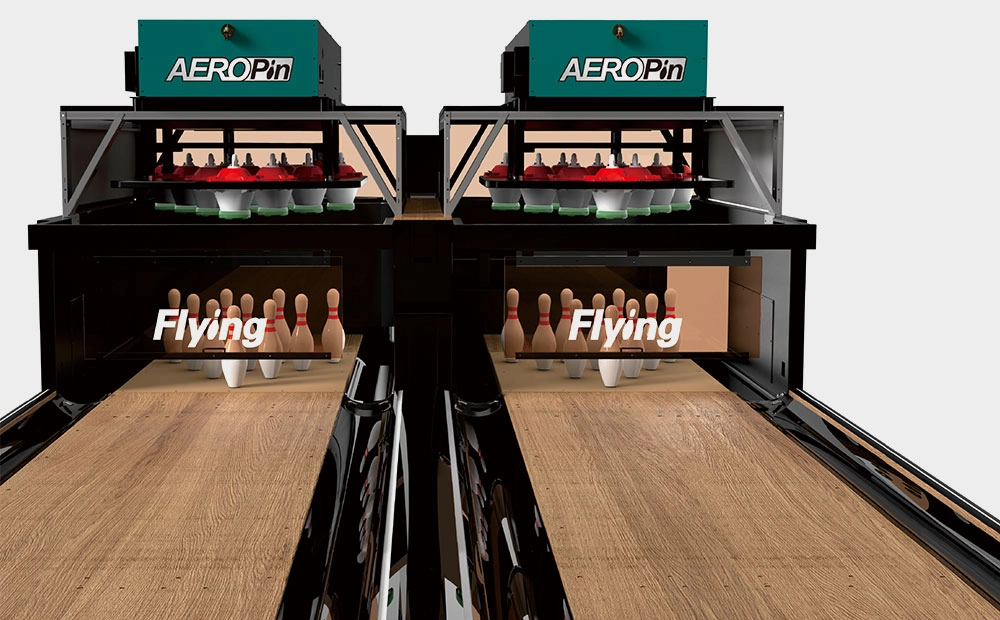
AEROPIN™ USBC-Certified String Pinsetter System
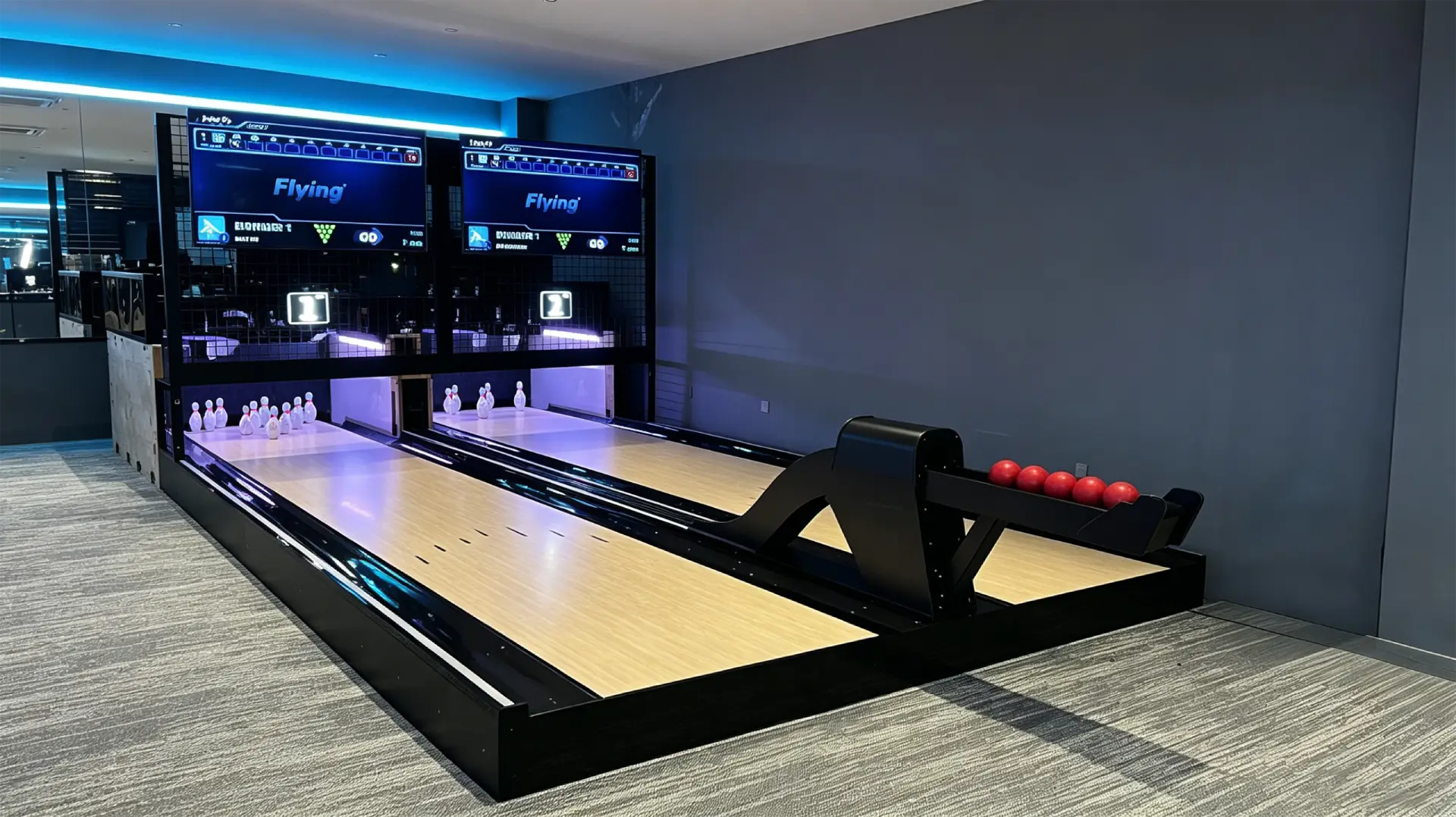
Flying Smart Duckpin Bowling Equipment for Commercial Venues
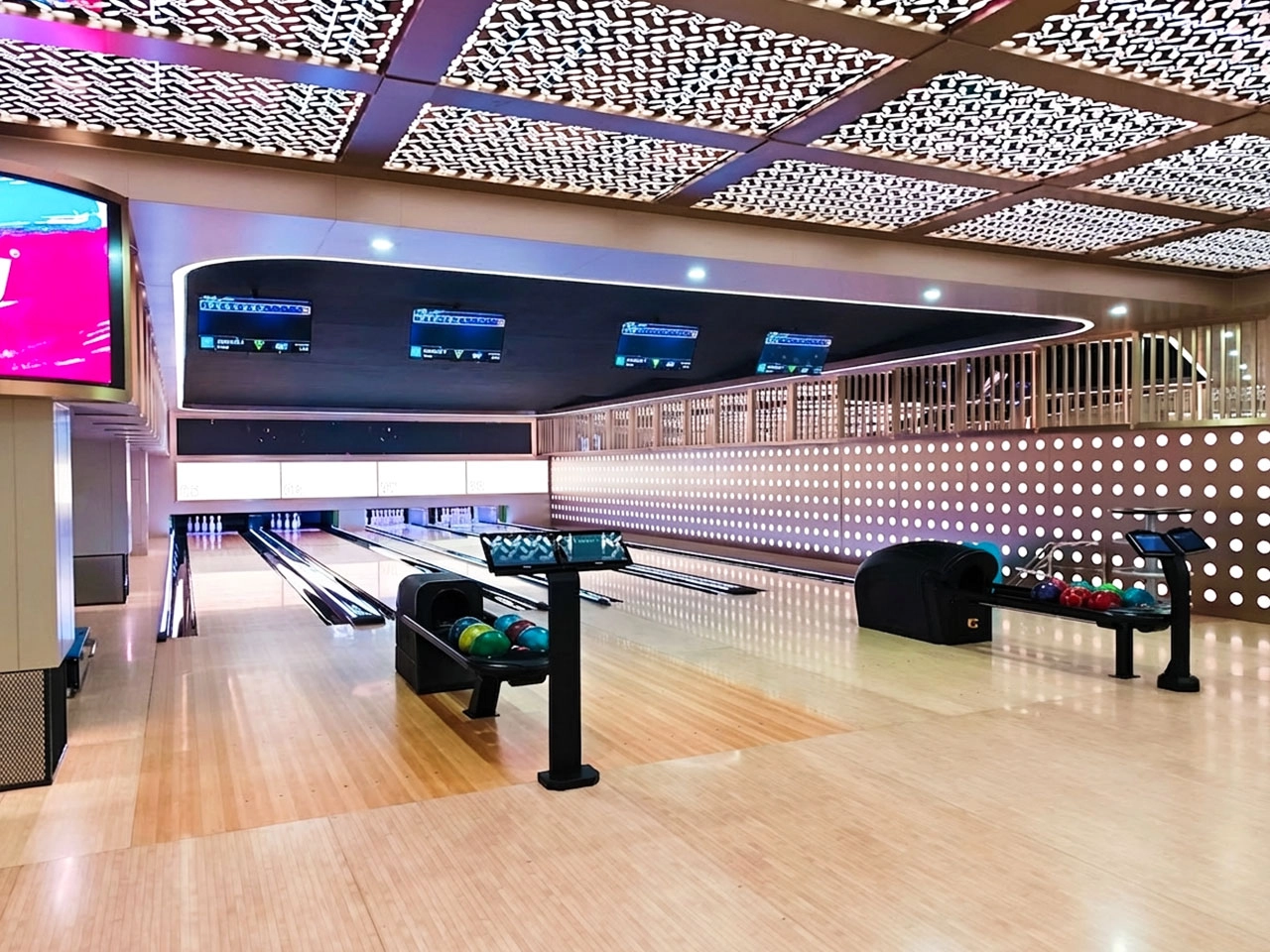
Complete Bowling Alley Equipment Package for Commercial Bowling Centers
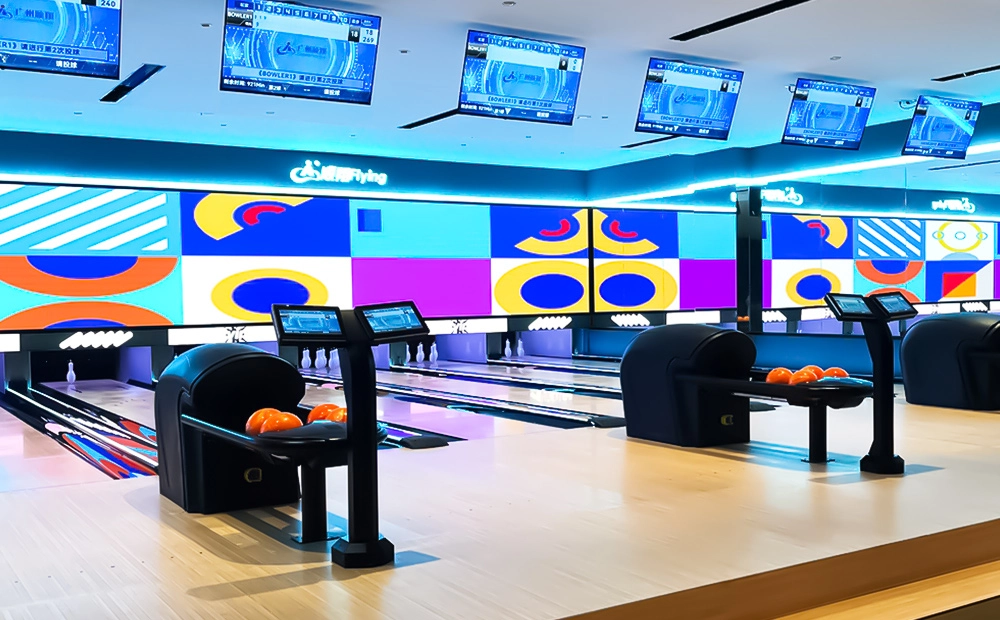
Medium Bowling Equipment for Compact Social Venues
You may also like
Build a commercial bowling venue with Flying’s complete string pinsetter bowling alley equipment package. The system includes the AEROPIN™ USBC-certified string pinsetter, customizable lanes, automatic scoring, ball return, lane lighting, pins, control hardware, and overseas installation support.
Designed for commercial bowling centers, family entertainment venues, hotels, resorts, bars, and premium private projects, this turnkey bowling system helps operators reduce sourcing complexity and prepare for reliable long-term operation.
Flying Smart Duckpin Bowling is a compact duckpin bowling equipment system designed for bars, family entertainment centers, hotels, resorts, cinemas, boutique bowling alleys, and social entertainment venues. With a standard 9.13m duckpin bowling lane, 1.25kg lightweight balls, automatic scoring, ball return, LED lighting, and a smart string pinsetter, it creates a fast-paced and easy-to-play bowling experience in a smaller footprint than traditional bowling.
The system is available as a turnkey duckpin bowling package, including lane equipment, a string pinsetter system, scoring hardware, control software, global shipping, installation guidance, and technical support.
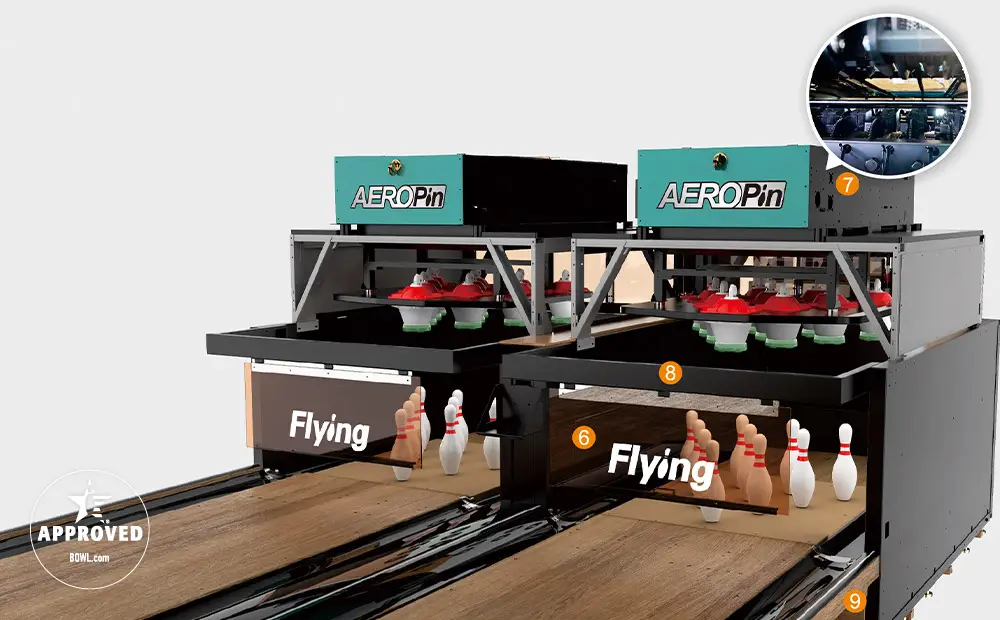
AEROPIN is Flying Bowling’s USBC-certified string pinsetter system for modern commercial bowling centers. Designed for fast pin setting, smooth ball return, low maintenance, and stable daily operation, it helps venue operators build league-ready and entertainment-focused bowling projects with confidence.
Flying Social Medium Bowling is a compact medium bowling equipment system designed for bars, cafes, family entertainment centers, community leisure venues, hotels, resorts, and small indoor entertainment spaces. With customizable lane lengths from 9.6m to 18m, small balls, lighter pins, string pinsetter technology, ball return, and automatic scoring, it creates an easy-to-play social bowling experience for players of different ages and skill levels.
Compared with full-size standard bowling, medium bowling requires less space and offers a more casual, interactive format. It is a practical choice for venues that want to add a bowling attraction without building a full commercial bowling alley.
Contact Flying
Start your bowling alley project
If you contact us now for more details, we can provide you with a custom bowling alley service. Our service team will get back to you within 24 hours normally!
© 2026 Flying BOWLING. Designed by gooeyun.
FOLLOW US:

Flying Bowling
Flying Bowling
Flyingbowling
Flyingbowling
Flyingbowling